OW online
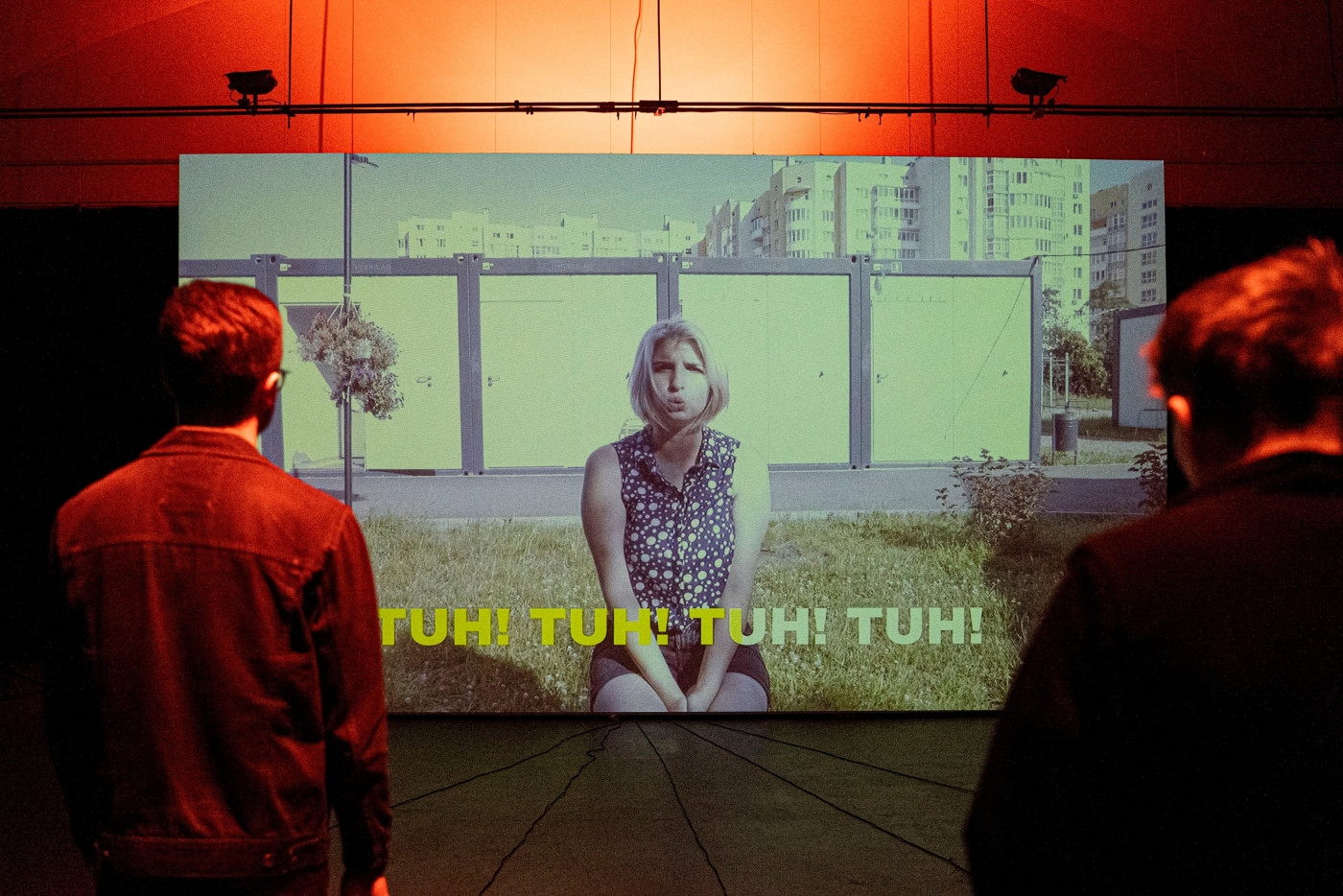
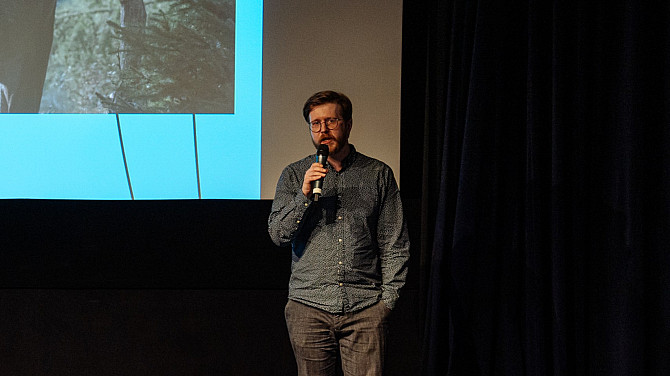
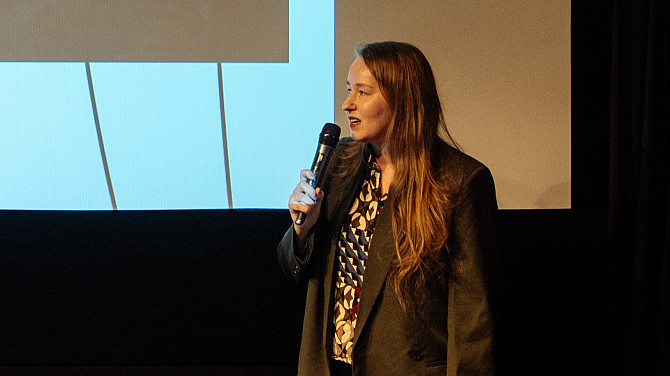
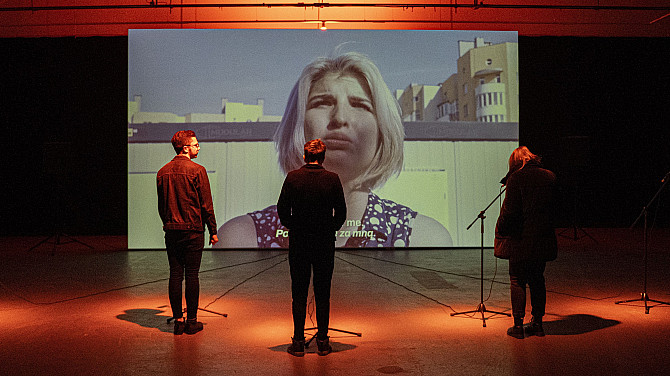
Repeat After Me 2022, a project by the Ukrainian collective Open Group, is part of the accompanying programme of this year’s One World festival. The audio installation, which works with the sounds of war reproduced by those who have experienced it, shifts attention from image to listening. We spoke with artists Anton Varga and Yuriy Biley about why hearing can be key to understanding the experience of war, how the project evolved between 2022 and 2024, and how audiences in different countries respond to it. In those reactions, a striking reality of today’s Europe becomes clear: while for people further west the exhibition remains a powerful artistic gesture, further east it becomes a chillingly practical manual for survival.
The project Repeat After Me works primarily with sound rather than image. What led you to believe that sound could carry the experience of war more powerfully than visual documentation?
Yuriy Biley:
Humans have three main senses – hearing, sight and smell. We work with hearing. Of course, we also perceive war strongly through our eyes, but sound is omnipresent. You can be far from the front line, in a civilian city that is being bombed, and you hear something very similar to what a soldier hears.
The difference lies in who is hearing it. A civilian hears weapons that can kill them, but they do not have one themselves. They cannot respond, they cannot defend themselves. It’s a one-sided experience. We were interested in how defenceless people hear war – those who only hear what is coming towards them.
You say the language of war is universal and that gunfire sounds similar everywhere. How do people in different countries react when they experience the project – do their responses differ?
Anton Varga:
It depends on a country’s experience with Russia. When we presented the project in Finland, people were very serious. They stood, watched the entire video and repeated the sounds.
The installation also includes instructions on what to do in the event of an attack. That varies depending on the type of weapon. If you know you’re hearing a drone, you might have fifteen to forty minutes. If it’s a ballistic missile, you have a minute or two – sometimes not even that.
In Finland, people took it very seriously. I think we can expect similarly strong reactions in Czech Republic. But the further west we go, the more people read our work simply as art – as an immersive sound installation, rather than a survival manual.
The title Repeat After Me invites visitors to repeat the sounds. What do you think people should take away from the experience?
Anton Varga:
We would like people to take it seriously. To realise that the war might not stop in Ukraine. And also to feel solidarity with those who have to live with war every day. Help can take many forms. Even a small donation for a generator in Kyiv can make a difference.
There are many simple stories about what people have had to sacrifice. Simply trying to repeat their sounds is a way of paying attention and showing respect.
Yuriy Biley:
The format is inspired by karaoke – something associated with entertainment. But when you actually try it, you quickly realise you’re at the opposite extreme. At first you might laugh, but very quickly it turns into a powerful and emotional experience.
Specific individuals appear in the installation; one man named Boris made a particularly strong impression on me. How did participants react when you asked them to demonstrate the sounds of weapons?
Anton Varga:
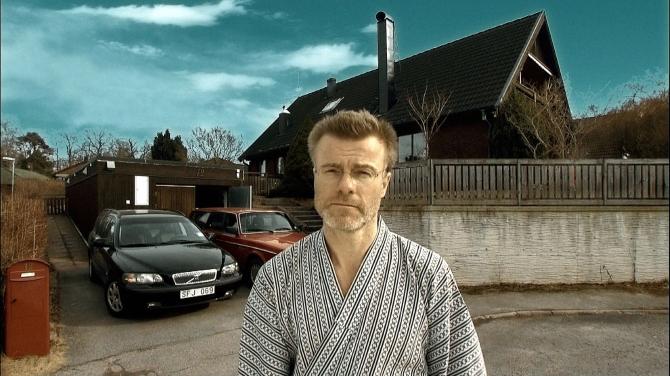
Boris initially refused to be filmed – he thought it was ridiculous. This was in the first months of the war, in a refugee camp. He walked around us and observed what we were doing. Eventually he sat down and demonstrated what weapons sounded like in his ears. At the time he had just fled heavily bombarded Mariupol. His testimony is very powerful – not only because of the sounds of weapons, but also because of the emotions behind them.
The project was created in two stages – in 2022 and 2024. How do these two parts differ?
Yuriy Biley:
By 2024 the spectrum of weapons is much broader. War evolves technologically at an incredible pace – there are more drones, new types of weapons, new technologies. If we were recording the project today, there would already be new sounds to include.
Anton Varga:
We recorded the second part over the course of a month in five different countries. It captures the experience of people two years after the beginning of the war – many of them already living abroad and trying to recall the sounds they once heard at home. It reveals further layers of memory and isolation.
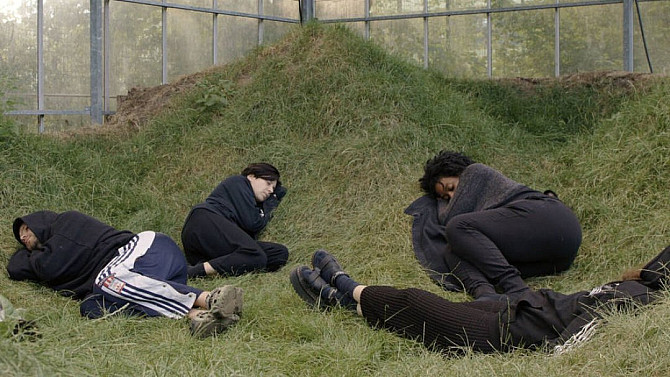
In the first part you can still feel a sense of hope. It was filmed in summer, in nature – everything is green. At the time, people believed they would soon return home, that the war surely had to end soon. Today, several years later, the “library” of war sounds is much broader – and the war continues.
Why is it important for the Polish Institute in Prague to support this exhibition?
Monika Olech, director of the institute:
Every year we try to draw attention to what is happening in Ukraine. Even though there is a sense of war fatigue, we must not forget what people in Ukraine face every day.
Poland has become a refuge for many refugees and artists. We want to find ways to bring their experiences closer to the Czech public. Thanks to our collaboration with the One World International Human Rights Film Festival, we can present a project by Ukrainian artists who are now also active in Poland.
This exhibition carries a strong emotional charge. It is not just an image – it is a personal, individual experience that helps people understand what war truly means.
Repeat After Me 2022 can be seen until 19 March at Fotograf Zone, Jungmannova 19/7, Prague. Opening hours: Mon–Thu, 13:00–19:00.
Accessibility
News
OW online
News
Photogallery 
Photogallery
Photogallery
Photogallery
Photogallery
Photogallery
Photogallery

Event
Event
Highlight

Highlight
Accessibility
Highlight
Film tip
Film tip
Film tip
Awarded
Highlight